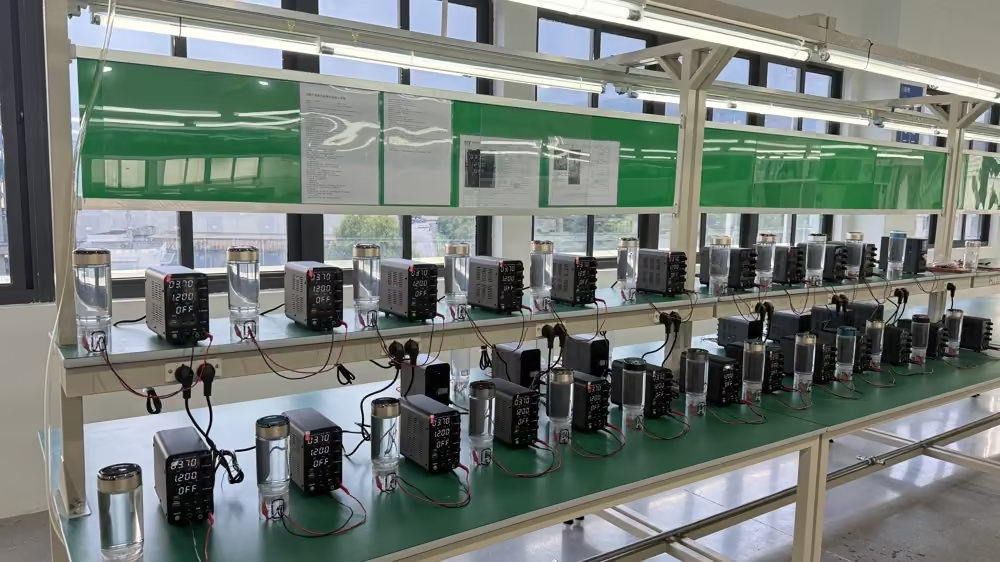
A hydrogen water bottle sample should answer a specific sourcing question: is this exact configuration ready for a bulk order? A quick visual check or one successful generation cycle is not enough. Buyers need a repeatable plan that records setup conditions, tests multiple units, defines pass criteria, and preserves evidence for later production comparison.
This sample test plan is intended for importers, distributors, and private-label brands. Adapt the acceptance limits to your product specification, destination market, and risk level.
Define the Sample Before Testing
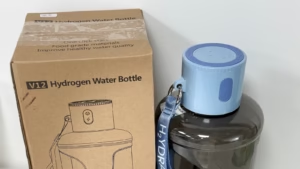
Assign each sample a unique ID and record what was received. Photograph the unit, retail box, rating label, accessories, and shipment carton before use. Record:
- Supplier, model, sample date, and sample ID
- Sample type: stock, engineering, pre-production, or golden sample
- Materials, color, logo method, battery, cable, and packaging version
- Firmware or PCB version where relevant
- Documents received with the sample
- Any differences from the quotation or approved specification
A stock sample may be useful for initial screening, but it should not be treated as approval of a custom battery, color, logo, manual, or package that has not yet been produced.
Use a Controlled Test Setup
Results are easier to compare when the setup is fixed. Use the same water source, fill volume, starting temperature, generation cycle, rest time, and charging procedure across all units. Record the room temperature and identify the measurement instruments.
For dissolved hydrogen testing, align the protocol with the hydrogen concentration comparison guide. Do not treat visible bubbles or oxidation-reduction potential as a direct concentration reading.
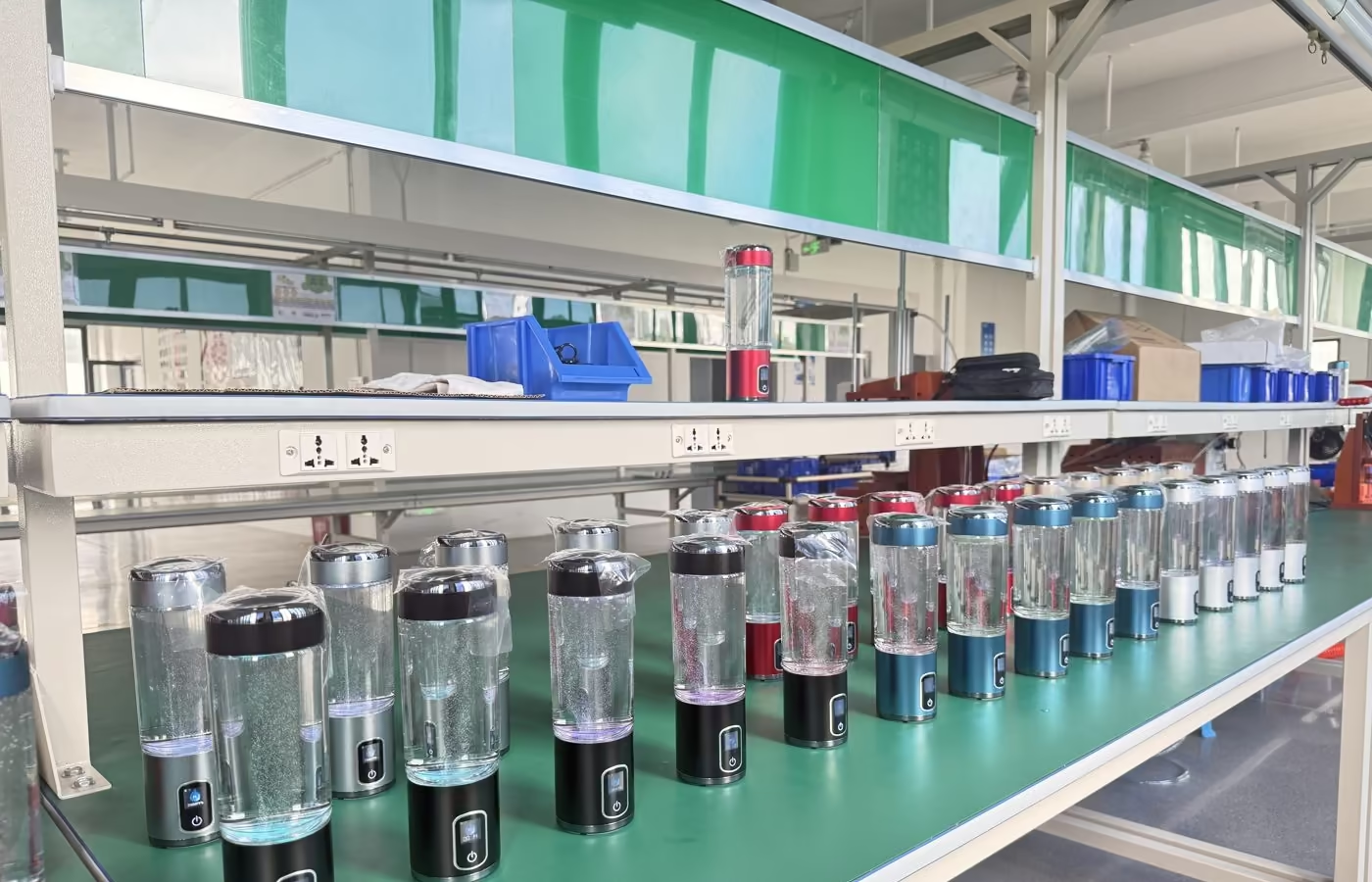
Eight Test Groups Before Bulk Approval
1. Visual, Dimensional, and Assembly Inspection
Inspect all units before operating them. Look for scratches, contamination, uneven gaps, damaged threads, loose bases, misaligned parts, poor printing, inconsistent color, sharp edges, and foreign material. Verify dimensions, weight, fill capacity, and accessory count against the specification.
Check that every water-contact part matches the approved material declaration. If the bottle uses glass, inspect for chips, inclusions, stress marks, and inadequate protection in the retail package.
2. Basic Function and User Interface
Run every advertised function on every sample:
- Power on and off
- Each generation mode and cycle time
- Indicator lights, display, sound, and error behavior
- Automatic stop and safety response
- Charging indication and low-battery indication
- Cleaning or venting mode, if included
Write down the actual user steps. If the product is confusing without a supplier explanation, the manual or interface needs revision before launch.
3. Leakage and Seal Checks
Test leakage in normal use and during reasonable handling. Fill to the stated level, close the bottle using the instructed method, operate a full cycle, and inspect the lid, threads, seals, base, charging area, and vent path. Repeat after opening and closing the bottle several times.
Where the design permits, perform upright, tilted, and inverted checks for a defined period. Do not block a designed pressure-release path. Record the fill level, duration, orientation, and whether any moisture appears.
4. Charging and Battery Behavior
Use the specified charger and cable. Record the initial battery state, charging time, full-charge indication, surface temperature, number of cycles per charge, low-battery behavior, and whether the unit can be operated while charging. Check connector fit and cable retention.
For a custom battery configuration, request the matching battery specification and transport documents. Do not assume that documentation for a similar cell applies to the battery in the approved sample.
5. Dissolved Hydrogen Performance and Repeatability
Define the performance test before seeing results. A useful record includes:
- Water source, mineral content where known, and fill volume
- Starting water and room temperature
- Generation mode and exact cycle duration
- Whether the bottle was sealed and how it was handled
- Sampling method and delay between cycle end and reading
- Instrument model, calibration or verification status, and units
- Individual readings for each unit and each repeated cycle
Report the range and average, not only the highest reading. If a result is far outside the others, investigate the sample, instrument, sampling step, and water conditions before excluding it.
6. Sensory, Cleaning, and Water-Contact Checks
Evaluate unusual odor, taste, visible residue, discoloration, and particles before and after repeated use. Follow the supplier’s cleaning instructions and confirm that routine cleaning is practical for the target customer. Record whether parts retain water in a way that may complicate drying or storage.
These checks do not replace laboratory material or migration testing when required. They identify obvious issues and verify the user experience.
7. Durability and Handling Checks
Use a risk-based set of repeated-use tests: generation cycles, lid opening and closing, button operation, connector insertion, standing stability, and reasonable transport vibration or drop testing for the packaged product. Define the number of cycles and failure criteria in advance.
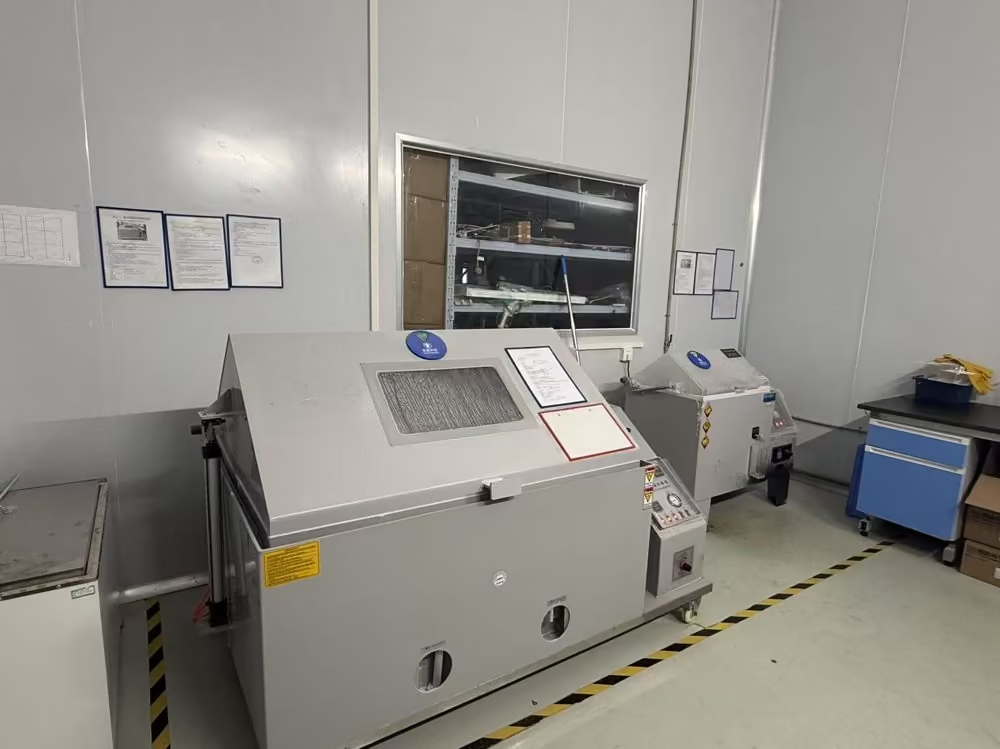
After durability testing, repeat the functional, leakage, charging, and appearance inspections. A product should not pass simply because it still powers on.
8. Packaging and Documentation Review
Test the entire selling unit, not only the bottle. Check carton fit, internal protection, scuff resistance, accessory retention, barcode readability, model and color labels, warnings, manual accuracy, and master-carton marks. Compare the physical package with the approved artwork file.
For a detailed development checklist, see private-label packaging, labels, manuals, and battery shipping.
Example Acceptance Matrix
| Test | Method | Example acceptance approach | Evidence |
|---|---|---|---|
| Appearance | Inspect all samples under consistent lighting | No critical defect; cosmetic limits match approved standard | Photos and defect log |
| Function | Run every mode on every sample | All functions complete without error | Result sheet and video where useful |
| Leakage | Defined fill, cycle, orientation, and duration | No leakage outside designed vent behavior | Timed observation and photos |
| Charging | Specified charger and cable | Indicators and charging behavior match specification | Time, temperature, and cycle record |
| Dissolved hydrogen | Controlled water and sampling protocol | All units fall inside the agreed range | Raw readings and instrument details |
| Packaging | Compare physical set with approved artwork and packing list | Correct version, protection, labels, and accessories | Annotated photos |
The table shows how to structure acceptance, not universal limits. Put actual numerical limits in the approved product specification or quality agreement.
How to Handle a Failed Sample
- Preserve the failed unit and record the test conditions.
- Repeat the test only after checking the procedure and instrument.
- Ask the supplier for containment and a written cause analysis.
- Record any component, process, or artwork change proposed.
- Retest a corrected sample using the same protocol.
- Update the approved specification and golden sample before production.
Do not allow a verbal explanation to replace an updated drawing, specification, test report, or approved sample.
Sample Approval Report
Your final report should contain the product identity, photos, test setup, raw results, deviations, open actions, document list, and one clear decision: approved, approved with conditions, or not approved. Include the names and dates of the buyer and supplier representatives responsible for closure.
Keep the approved sample, packaging, and report available for pre-shipment comparison. This connects product development with the factory’s production quality plan.
Before You Place the Bulk Order
Confirm that the purchase order references the approved specification, golden sample, artwork, packing list, inspection plan, and required documents. Also confirm whether the production unit may contain any substitution. For a broader supplier review, use the OEM manufacturer checklist.
To request samples for a defined market and private-label project, send PHYFLOW your test requirements and product brief.
Frequently Asked Questions
Can I approve a bulk order from one sample?
One sample can support early screening, but it provides little evidence of unit-to-unit consistency. Increase the sample count and repetitions according to order size, product novelty, and the cost of failure.
Should I use tap water for the hydrogen test?
Use the water relevant to your test objective, but keep it consistent and document it. If suppliers use different water sources, their readings are not directly comparable.
Does visible bubbling prove good hydrogen performance?
No. Bubble appearance depends on the gas path, pressure, water, lighting, and other variables. It is not a quantitative measurement of dissolved molecular hydrogen.